In home care Twickenham
020 8892 9222 


Dementia doesn't have to mean moving out of home
Caring for Mrs G

Mrs E contacted Cura Care when her mother, Mrs G, was in hospital. 

Mrs G has Alzheimer’s and had fallen one day when she was out.  There had been several occasions where neighbours had seen Mrs G out on her own and Mrs E faced the dilemma that she was concerned for her mother’s safety but was not in a position to have her mother live with her and didn’t want to put her in a home.


Mrs E contacted us and we met her whilst her mother was still in hospital to discuss possible care options.  We talked about the possibility of her mother moving into a home but Mrs E knew that her mother would not want this and she was under pressure from the rest of the family for this event not to arise. 


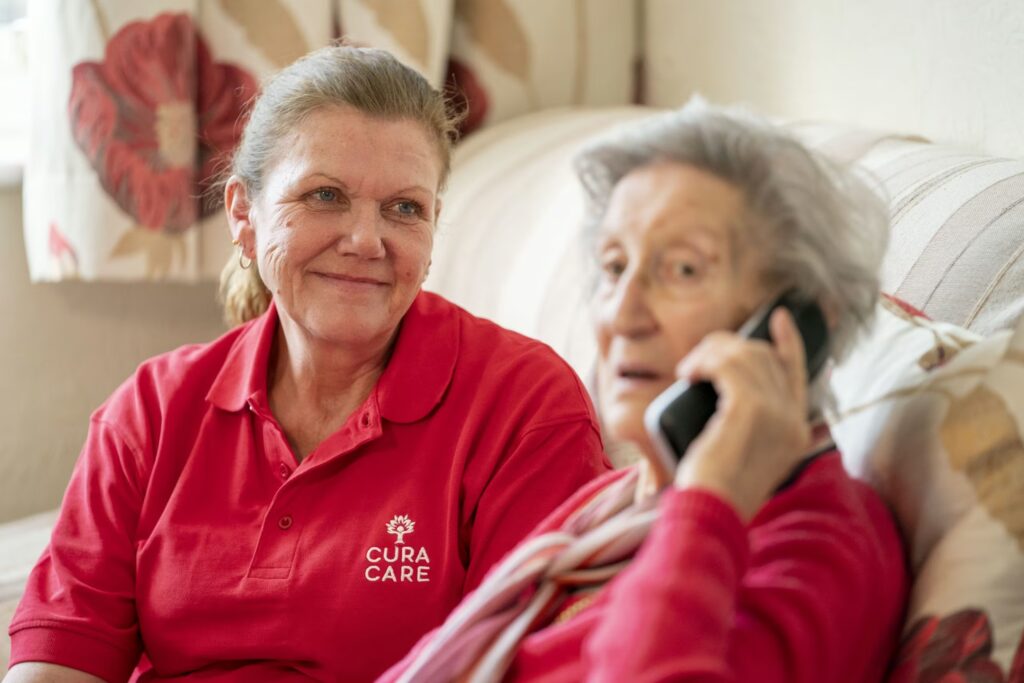
After discussing the options available, Mrs E decided live-in care was the most attractive as it minimises the disruption to Mrs G's life.  Mrs G still gets to stay at home and is still able to go out and about in Richmond as before but now Mrs E has the peace of mind that her mother is escorted by Amy, her carer.

Discovering that a loved one has dementia can be difficult to come to terms with.  Dementia care TwickenhamMany people feel a great sense of frustration both towards the person with dementia and towards themself as they realise that their relationship with their loved one will inevitably change and roles will reverse.

This is happening to an increasing number of people.  There are over 750,000 diagnosed cases of dementia in the UK according to the Alzheimer's Society and this figure is predicted to rise to one million by 2025.


Dementia is not a single disease but the collective term used to refer to over 100 different conditions of the mind.  Commonly observed signs of dementia include:

  • Memory loss
  • Confusion
  • Loss of physical co-ordination
  • Speech problems

Like many conditions of the mind, the way people with dementia are cared for and treated has a huge impact on their behaviour and well-being.  All too often people with the condition are treated inappropriately leading to a deterioration in their state of mind and to an earlier demise.  

We feel strongly that people experiencing dementia deserve to live as fulfilling a life as possible and that includes living at home.  This is particularly the case when they have lived in their home for many years and therefore feel familiar with their surroundings as opposed to being subject to unnecessary confusion in a new, unfamiliar place.


Carefully managed and with the right support, there is no reason why somebody with dementia cannot maintain independence and quality of life at home for years to come.


We are able to provide tailored, one-to-one home care to those living with dementia in order to maximise their well-being at home.  We are also able to help loved ones to come to terms with the condition and help minimise suffering.

On a day to day level, this support may include:

  • helping maintain a safe environment in which to live
  • accompanying to therapy sessions (e.g. art or music therapy sessions)
  • escorting to doctors appointments
  • facilitating mentally stimulating activities (e.g. setting puzzles and quizzes)
  • managing changes in behaviour that result from dementia
  • creating social interaction
  • overseeing daily activities
The families of people living with dementia are often overlooked.  However, the reality is that it can be a very distressing time for families.  There are many new things to learn and it can be difficult to know where to turn.  It is for this reason that we have compiled a dementia fact sheet where we provide an overview about dementia and offer practical tips about living with or caring for someone with dementia.

For more information about dementia please see our
dementia fact sheet and please do not hesitate to contact us to further help and advice.